⏱️ Read time: 12 minutes · Last updated: October 2025 · Based on multiple monsoon-season visits
Nobody comes to Phuket for the surfing. If you want serious waves, you go to Bali, Portugal or Hawaii. Phuket's waves are smaller, less consistent, and available only half the year. On paper, this shouldn't be a surf destination at all.
And yet — walk along Kata Beach on a July morning, and you'll see something you wouldn't expect. Dozens of boards in the water, a mix of first-timers wobbling onto their feet and more experienced surfers carving along the shoulder. Surf schools with colourful boards racked outside. Beach cafés serving coffee to wet, salt-haired customers. Phuket during monsoon is a surf scene in its own small, sun-showered, surprisingly charming way.
This guide is honest about what Phuket's surf actually offers — its real strengths, its genuine limitations, and whether it's worth planning a trip around. If you're coming to Thailand anyway and want to spend a few mornings in the water, this tells you exactly where to go, when, and what to expect.
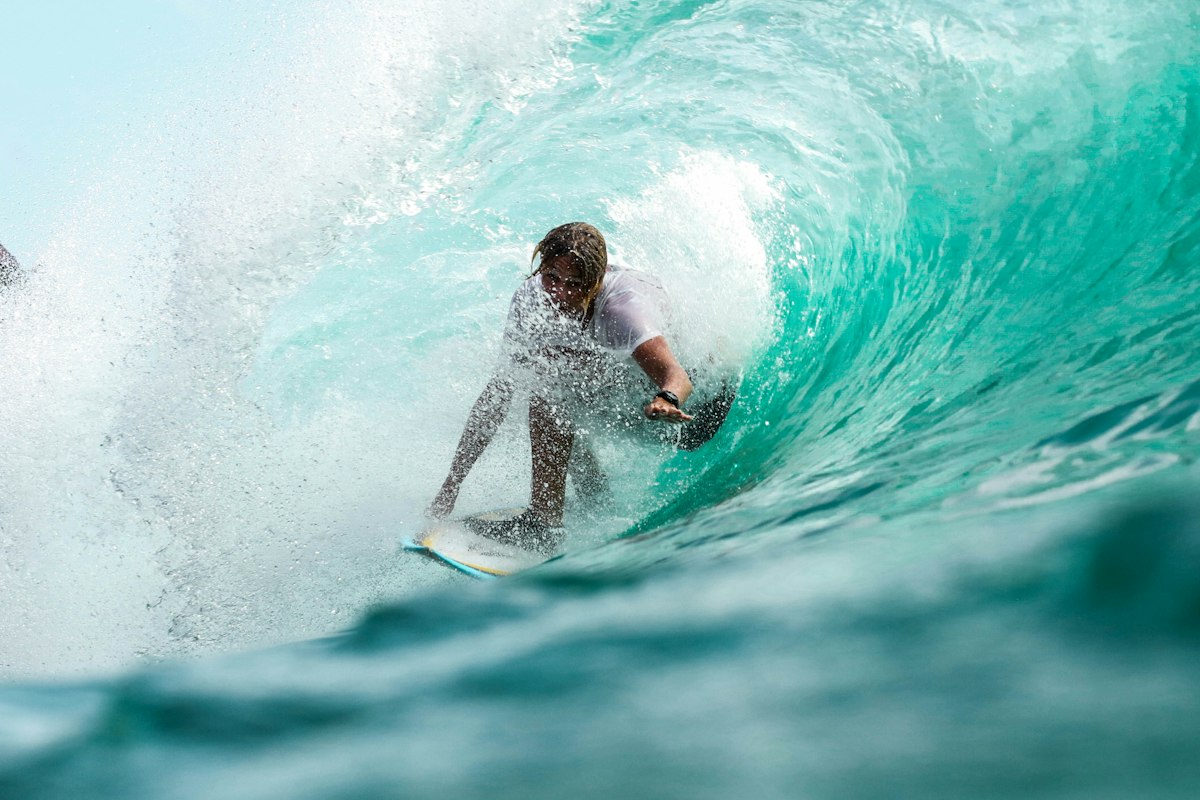
Surfing in Phuket happens mostly in monsoon season — when the Andaman Sea finally gets some swell.
The Short Answer — Is Phuket Worth Surfing?
Yes, if you set realistic expectations. Phuket is a beginner-friendly surf destination with warm water, forgiving waves, and good infrastructure. It's not a place for advanced surfers chasing performance waves — the best days here would be an easy morning session for someone used to real surf.
If you're a complete beginner who wants to learn in warm water without the pressure of a serious surf town, Phuket works beautifully. If you're an experienced surfer looking for perfect waves, you'll want to look elsewhere — or at least plan to combine your Phuket trip with Bali or Sri Lanka.
🌊 Best Season
May – October
Monsoon season only
Best waves: June–September
🏄 Best Beach
Kata Beach
Most consistent waves
Best infrastructure
📏 Wave Size
1–3 feet typical
4–6 feet on big days
Rarely bigger
💰 Cost
200–500 THB/day
Board rental
Lessons: 1,000–1,500 THB
Why Phuket Surfing Is Seasonal
Phuket has two monsoons per year, and they do completely different things to the sea.
From November to April, the northeast monsoon brings dry, settled air. The Andaman Sea becomes flat as a swimming pool. This is why Phuket's beaches look the way they do in postcards — and why no one surfs here for six months of the year. The waves simply aren't there.
From May to October, the southwest monsoon arrives. The winds shift, the swell comes up from the Indian Ocean, and suddenly Phuket has waves. Not huge ones, and not always clean ones, but waves. The rain that defines this season is precisely what creates the surf.
The change is dramatic. A beach that was flat and glassy in March can have consistent shoulder-high waves in July. That's why Phuket's entire surf scene operates as a monsoon-only business — surf schools open in May, close in October, and the instructors spend the rest of the year doing other work.
For the wider picture of how Phuket's seasons affect travel, see our best time to visit Phuket guide.
The Best Surf Beaches in Phuket
Kata Beach — The Main Surf Hub
Kata Beach — the centre of Phuket's surf scene. Boards, schools, and the most consistent waves on the island.
Kata is where nearly all of Phuket's surfing happens. The beach faces southwest, which means it catches the monsoon swell directly, and the shape of the bay produces reasonably clean waves. On a good day in July or August, you'll see a dozen or more surfers in the water.
Kata is also where the infrastructure is. The main beach road has several surf schools, board rental shops, and cafés that cater to surfers. You can rent a board for the day (200–500 THB), book a lesson (1,000–1,500 THB), or just watch from the beach.
The wave at Kata is a beach break — meaning it breaks over sand rather than coral or rock. This makes it much safer for beginners, since there's no reef to hit if you fall. The waves are typically 1–3 feet, occasionally reaching 4–6 feet on bigger swell days.
Best for: Beginners, intermediates, anyone wanting the most convenient surf experience in Phuket.
Best months: June, July, August, September.
Facilities: Multiple surf schools, board rentals, cafés, and beach chair rentals (100–200 THB).
Kalim Beach — The Quieter Alternative
Kalim sits just north of Patong on the road toward Kamala. It's a smaller beach, but the wave shape can be better than Kata on certain days, especially when the swell is bigger. Because it's less publicised, Kalim gets far fewer surfers — you'll often have the lineup to yourself.
The downside is infrastructure: there are no surf schools at Kalim, so you need to bring your own board or rent one in Patong. There are a couple of small cafés near the beach, but not much else.
Best for: Intermediate surfers with their own board, anyone wanting a less crowded session.
Best months: July, August, September.
Facilities: Limited — no surf schools, no rentals at the beach. Bring your own gear.
Nai Harn Beach — Southern Surf
Nai Harn is at the southern end of Phuket, and it catches the swell well in monsoon season. The wave is smaller and gentler than Kata's — really only suitable for beginners and longboarders. But on good days, it produces long, mellow rides that are genuinely enjoyable.
There's one small surf school operating at Nai Harn during monsoon season, and board rentals are usually available on the beach. The setting is quieter and more local than Kata.
Best for: Beginners, longboarders, anyone wanting a quieter southern option.
Best months: July, August, September.
Facilities: One small surf school, some board rentals, a few local cafés.
Karon Beach — On Big Days Only
Karon is the longest beach in Phuket (nearly 4 km), and on big swell days it produces some genuinely powerful waves. But Karon also has a stronger shore break and can be dangerous on rough days — rip currents are a real concern here in monsoon season.
If you're an experienced surfer and the swell is up, Karon can produce a better wave than Kata. If you're a beginner, avoid Karon during monsoon. Stick to Kata or Nai Harn.
Best for: Experienced surfers on bigger swell days.
Best months: August, September.
Facilities: Some board rental shops on the beach road.
Bang Tao Beach — For Advanced Days Only
Bang Tao, on the northwest coast, is a longer beach with a bigger swell window than Kata. On strong monsoon days it can produce the biggest waves in Phuket — but the wave is often messy and the conditions are inconsistent.
Not really worth planning around unless you're local and know the day's forecast. Skip unless you're already in the area.
Best for: Experienced surfers on specific swell days.
Best months: August, September.
The Best Time to Surf in Phuket — Month by Month
Not all monsoon months are equal. Here's how the season plays out.
May: The monsoon arrives. Waves start appearing, but conditions are still building and inconsistent. Small waves (1–2 feet). Some surf schools open late in the month.
June: The surf season begins properly. Consistent waves at Kata and Kalim, typically 1–3 feet. Good conditions for beginners. Most surf schools are now open.
July: Solid month. Waves often 2–4 feet, occasionally bigger. The busiest month for surf schools. Rain is frequent but typically as afternoon showers.
August: Peak season for bigger waves. Swell builds, and days with 4–6 foot waves become more common. Better for intermediates and experienced surfers than complete beginners.
September: Often the most consistent month of all. Bigger swell, better-shaped waves, and the monsoon starting to ease. Conditions can be excellent, though the rain is heavy when it comes.
October: The monsoon tail. Waves are still present but becoming less consistent. Some surf schools close towards the end of the month.
November–April: No surf. The sea is flat. Surf schools are closed.
🌊 Insider tip: The best time to surf in Phuket is not necessarily the sunniest time. If you want consistent waves, come during the heart of monsoon season (July–September), when the rain is heavier but the surf is better. If you want drier weather, come at the edges of the season (June or October) and accept less consistent waves.
What Phuket Surf Is Actually Like
Honest description: Phuket surf is small, warm, and forgiving. The waves at Kata are typically 1–3 feet — enough to learn on, enough for a genuinely fun session, but not enough to feel like real surf if you're used to bigger waves.
The water is bath-warm (28–30°C / 82–86°F), so no wetsuit is needed. You'll surf in boardshorts or swimwear. The breaks are beach breaks over sand, which means no reef to worry about when you fall. This is one of the things that makes Phuket ideal for beginners — you can fall as much as you need to without any risk.
The waves are also generally soft — they break slowly and don't have much punch. This makes them easier to catch, easier to stand up on, and less intimidating if you're new to surfing.
On bigger days (4–6 feet), the wave changes character. It gets faster, more critical, and can produce some genuinely good rides for intermediate surfers. But these days are the exception, not the rule.
Consistency is the main limitation. Some days are flat. Some days are messy. Some days the wind is wrong. If you're here for a week during monsoon season, expect maybe 3–5 days of genuinely good surf conditions. The rest will be mediocre or unridable.
Surf Lessons in Phuket — What to Expect
Phuket has a good selection of surf schools, mostly clustered around Kata Beach during monsoon season. Lessons are usually 90 minutes and cost 1,000–1,500 THB ($29–43) including board rental and instruction.
A typical beginner lesson covers: how to lie on the board, paddling technique, how to stand up (pop-up), and basic surf etiquette. You'll spend most of the lesson in the shore break, catching small waves with the instructor's help.
Most people stand up on their first day. The waves at Kata are gentle enough that complete beginners frequently catch and ride waves within the first session. This is why Phuket is such a good place to learn.
For intermediate surfers, some schools offer coaching sessions focused on technique, wave selection, and turns. These cost 1,500–2,500 THB per session.
Book directly through the surf school or through Trip.com, which lists several Phuket surf schools with verified reviews.
Surf Board Rental — Prices and Options
Board rental at Kata Beach costs 200–500 THB ($6–14) per day, depending on the board type and rental shop. Soft-top foam boards (the standard for beginners) are the cheapest. Hard epoxy boards for intermediate surfers cost more.
Weekly rentals typically work out cheaper — expect to pay 1,200–2,500 THB ($35–72) for a full week.
If you're serious about your surfing, bring your own board. Phuket's rental boards are mostly soft-tops and entry-level epoxy boards — fine for beginners and intermediates, but limited if you're used to a specific shape. Airlines charge $100–200 each way to fly with a surfboard, so it's only worth it for longer trips.
What to Bring for Phuket Surfing
You need less than you'd think for surfing in Phuket — the warm water and gentle waves make it a very simple setup.
Reef-safe sunscreen. The sun is strong even on cloudy monsoon days, and you'll spend hours in the water. Bring waterproof, reef-safe sunscreen.
Boardshorts or swimwear. No wetsuit needed. Some surfers wear a rash guard for sun protection and to prevent board rash.
A rash guard. Not essential but useful — protects against sun and board rash on your chest and stomach when paddling.
A dry bag. For your phone, wallet, and hotel key. You can leave valuables at your hotel or in a locker at the surf school, but a dry bag keeps things flexible.
Cash. Most surf schools and board rentals are cash-only. Bring 500–1,000 THB in small notes.
A towel and change of clothes. You'll want a shower after your session. Most surf schools have basic shower facilities.
What NOT to bring: Don't bring your passport to the beach. Don't bring large amounts of cash. Don't bring expensive jewellery or watches. Leave valuables at your hotel.
Surf Safety in Phuket — the Real Risks
Phuket surf is generally safe, especially for beginners. But there are genuine risks worth understanding.
Rip currents. This is the biggest risk. During monsoon season, Phuket's beaches can have strong rip currents — narrow channels of water flowing out to sea that can carry swimmers and surfers away from shore quickly. If you're caught in a rip, don't panic and don't swim directly against it. Swim parallel to the shore until you're out of the current, then head in.
Big days. On big swell days (4–6 feet), conditions change quickly. Waves break harder, currents strengthen, and shore break can become dangerous. If you're a beginner, stick to the calmer days. If the locals are staying out of the water, that's a sign.
Other beach users. Kata Beach in monsoon season is not crowded, but there are still swimmers in the water. Keep an eye out, and respect the zones that lifeguards mark off.
Rain and lightning. Monsoon season brings thunderstorms. If you see lightning, get out of the water immediately and stay out for 30 minutes after the last thunder. This is standard practice everywhere and it matters here too.
Sun exposure. Even on cloudy days, the tropical sun is strong. Reapply sunscreen every two hours, and consider a rash guard for longer sessions.
See our Patong Beach safety guide for broader beach safety advice that applies to all Phuket beaches.
Where to Stay for Phuket Surfing
If you're coming to Phuket primarily to surf, staying near Kata Beach makes the most sense — you can walk to the beach, catch the morning session, and be back at your hotel within minutes. There are hotels at every price point in Kata.
For travellers who want to combine surfing with the rest of Phuket, staying in Patong is a reasonable compromise. Patong is 20 minutes from Kata by Grab (200–250 THB), which is manageable for a daily surf session. You get all the advantages of Patong — markets, nightlife, food, day trips — plus a morning surf session.
Our guide to the best hotels near Malin Plaza covers accommodation in Patong across every budget. For a full breakdown of how Patong compares to other areas, see the Karon vs Patong comparison.
If you want to base yourself in Kata, look for hotels within walking distance of the beach. Both Agoda and Trip.com list hotels by area, so you can filter to Kata specifically.
What to Do Between Surf Sessions
Phuket has plenty to offer when you're not in the water. A few suggestions that work well around a surf-focused trip.
Relax at a beach café. Kata has some excellent cafés with a surfer vibe, especially along the beach road. Good coffee, good breakfast, good Wi-Fi for checking the surf forecast.
Get a massage. A one-hour Thai massage costs 250–400 THB ($7–12) at shops around the beaches. Ideal after a long surf session.
Visit Malin Plaza. If you're staying in Patong, the market at Malin Plaza Phuket is a 5-minute walk inland. Full meals cost 250–400 THB ($7–11) and the food is excellent. See our Malin Plaza food guide for what to order.
Take a day off and explore. Phi Phi Islands (day trip guide) and Coral Island (day trip guide) are both worth doing on days when the surf is small or messy.
Try a cooking class. Phuket has some excellent classes — see our Phuket cooking class guide for details.
What NOT to Do When Surfing in Phuket
A short list of the mistakes visitors make.
Don't come in high season expecting to surf. November to April there are no waves. If surfing is your priority, come during monsoon.
Don't surf alone in monsoon season. Rip currents are real. Always surf with others, ideally with a school or instructor.
Don't ignore lifeguard warnings. If red flags are up, the water is dangerous. Do not paddle out.
Don't fight a rip current. Swim parallel to the shore. This is the single most important safety rule.
Don't expect world-class waves. Phuket surf is beginner-friendly and fun. If you're an advanced surfer expecting quality waves, adjust your expectations or plan a side trip.
Don't leave valuables on the beach. Petty theft happens everywhere, even at quiet beaches. Bring only what you need and use a dry bag.
Don't surf if you've been drinking. Obvious, but worth mentioning. Alcohol and surf don't mix, even in small waves.
Don't paddle out without knowing the conditions. Check with a local surf shop or school before you go. They'll know whether the day is beginner-friendly or serious.
🏄 Final tip: If you're new to surfing, book a lesson on your first day in Phuket. The instructors at Kata know the conditions and can get you standing up within an hour. From there, rent a board for the rest of your trip and surf as much as you want. That first lesson makes everything else easier.